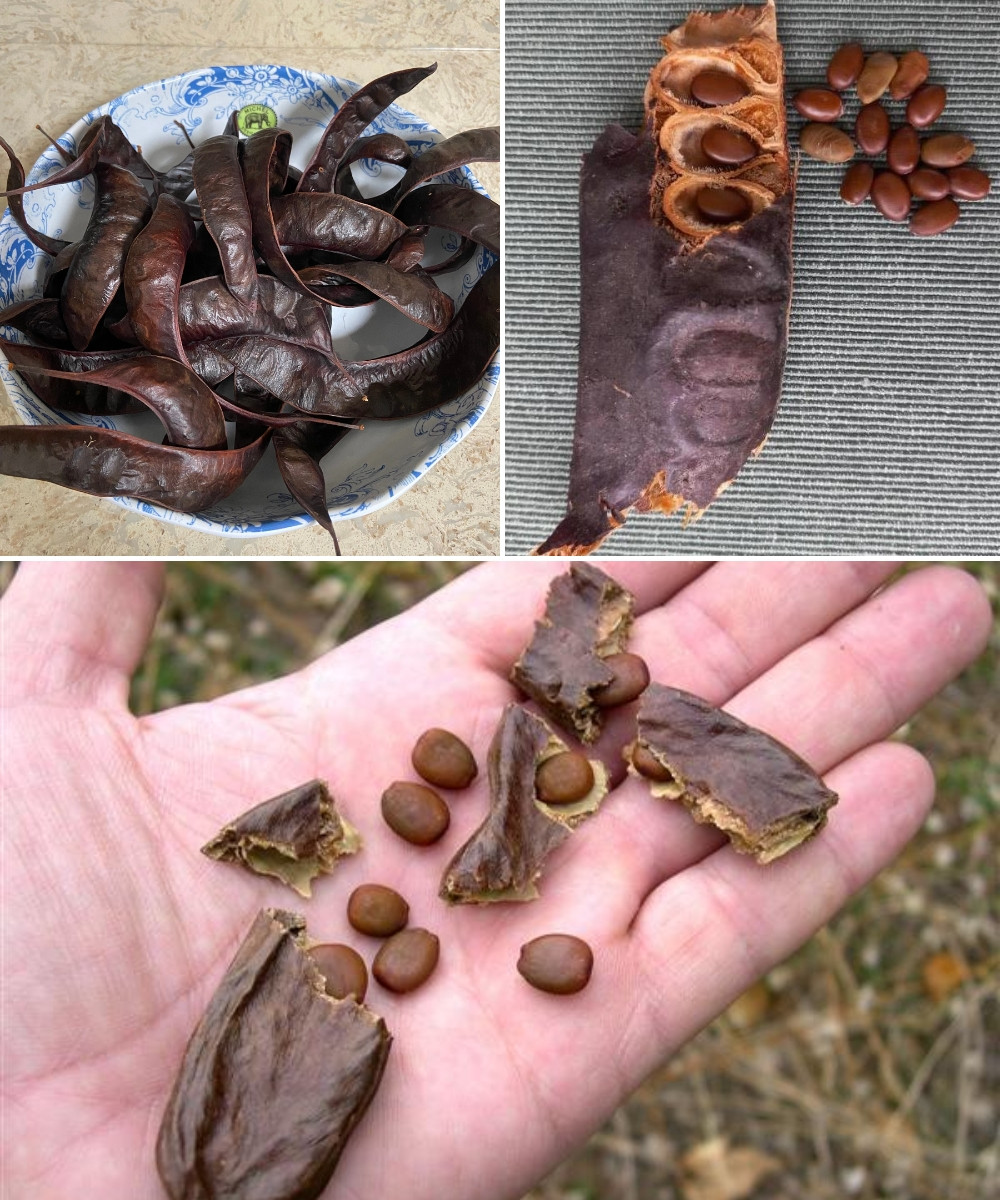
⚠️ **Important caution**: while these findings are promising, many parts of the tree also contain potentially toxic compounds (e.g. certain alkaloids in leaves and twigs) which may cause adverse effects if misused. ([practicalplants.org][5]) Therefore, any medicinal use should be approached with respect, caution, and ideally — professional guidance.
—
## 🪵 Everyday, Practical & Environmental Uses
Aside from food and medicine, Honey Locust offers a wide range of practical applications:
* **Timber & Woodwork** — The wood is extremely dense, shock‑resistant, and durable even in contact with soil. Historically, it has been used for fence posts, railroad ties, pallets, tool handles, furniture, even wheels. ([plants.sc.egov.usda.gov][11])
* **Fuel & Firewood** — Because of its density and durability, Honey Locust wood burns well and yields good fuel — useful in many traditional and rural contexts. ([apps.worldagroforestry.org][12])
* **Erosion Control & Land Reclamation** — Thanks to its strong root system and ability to grow in poor soils, it’s used in agroforestry, as a pioneer species on degraded land, for stabilizing slopes, and controlling soil erosion. ([feedipedia.org][2])
* **Livestock & Agroforestry** — As noted, pods and foliage offer fodder; the tree can be integrated into silvopastoral systems without competing severely with pasture grasses. ([feedipedia.org][2])
* **Shade & Landscape Use** — In many parts of the world (even beyond North America), thornless or less-thorny varieties are planted in cities, parks, alongside roads — for shade, ornamental value, windbreaks or boundaries. ([srs.fs.usda.gov][13])
—
## ⚠️ What to Watch Out For — Toxicity & Risks
While Honey Locust is remarkable, it’s not a completely “safe wild tree to use indiscriminately.” Some risks:
* Certain parts (leaves, twigs, old fruit) contain alkaloids — like “gleditschine” and “stenocarpine” — which are biologically active and can be toxic: causing stupor, loss of reflexes, or other negative effects. ([practicalplants.org][5])
* Traditional or experimental extracts (e.g. from fruit) have shown cytotoxicity in animal studies; in one example, extracts slowed tumor growth but caused weight loss and degenerative changes in liver and spleen. ([practicalplants.org][5])
* The tannins in the pulp or pods may vary depending on maturity: while young pods/pulp are sweet, older pods become bitter, tough, and less suitable for eating. ([The Ethnobotanical Enthusiast][9])
* Overuse, misidentification, or wrong preparation may lead to toxicity — underlining the importance of caution, especially if used medicinally.
—
## 💡 Why the Honey Locust Matters — Then, Now, and Potentially Tomorrow
1. **A living legacy of traditional medicine and ethnobotany.** Indigenous peoples historically used this tree for both nourishment and healing — showing a deep understanding of its multiple potentials.
2. **Sustainable resource for food, fodder, wood and land restoration.** In a world facing soil degradation, deforestation, and food insecurity, resilient trees like Honey Locust — that tolerate harsh conditions, offer fodder, yield durable wood, and stabilize soil — become increasingly valuable.
3. **Promising for modern scientific & medicinal research.** Early lab studies point to interesting bioactive compounds (antioxidants, anti-inflammatory, possible anticancer activity) in leaves, seeds, pods — inviting deeper pharmacological research and responsible exploration.
4. **Versatile in agroforestry, landscaping, and ecological restoration.** Whether as shade trees in cities, windbreaks, or pioneers in degraded lands, Honey Locust offers multiple ecosystem services.
—
## 📝 Conclusion: Rediscovering a “Hidden” Tree
The Honey Locust tree — often overlooked or dismissed as just another ornamental or thorny street‑tree — hides a wealth of ecological, nutritional, medicinal, and practical value. From sweet pods that feed wildlife (and potentially humans), to medicinal extracts under scientific scrutiny, to rugged wood for craft and construction, the tree stands as a testament to nature’s subtle generosity.
That said — the very properties that make it powerful (alkaloids, tannins, varied chemicals) also demand respect and caution. What works as traditional remedy or fodder may not always equate to safety or efficacy in modern contexts.
If we treat the Honey Locust with curiosity, care, and responsibility — combining traditional wisdom with modern research — we may find in it an ally: for health, for land, for communities.
—
If you like — I can **draft a full “feature‑style” article** about Honey Locust (as if for a nature magazine), with **historical anecdotes, quotes from traditional medicine sources, and modern science** — the kind you could publish or print.
Do you want me to build this version for you now?
[1]: https://journals.lww.com/egpj/fulltext/2018/17020/bioactivity_and_chemical_constituents_of_gleditsia.3.aspx?utm_source=chatgpt.com “Egyptian Pharmaceutical Journal”
[2]: https://www.feedipedia.org/node/295?utm_source=chatgpt.com “Honey locust (Gleditsia triacanthos) | Feedipedia”
[3]: https://arboretum.live/en/gleditsia-triacanthos.html?utm_source=chatgpt.com “Arboretum Gleditsia Triacanthos”
[4]: https://www.ecotenet.org/species/Gleditsia_triacanthos?utm_source=chatgpt.com “Gleditsia triacanthos | Ecotenet”
[5]: https://practicalplants.org/wiki/gleditsia_triacanthos/?utm_source=chatgpt.com “Gleditsia triacanthos (Honey Locust) – Practical Plants”
[6]: https://indiananativeplants.org/images/resources/Gordon%20Mitchell%20Articles/GM_honey_locust.pdf?utm_source=chatgpt.com “HONEY LOCUST”
[7]: https://www.naturalmedicinalherbs.net/herbs/g/gleditsia-triacanthos%3Dhoney-locust.php?utm_source=chatgpt.com “medicinal herbs: HONEY LOCUST – Gleditsia triacanthos”
[8]: https://naturewalk.yale.edu/trees/gleditsia/triacanthos/honey-locust-139?utm_source=chatgpt.com “Honey Locust | Yale Nature Walk”
[9]: https://ethnobotanicalenthusiast.wordpress.com/2017/08/01/honey-locust-gleditsia-triacanthos/?utm_source=chatgpt.com “Honey-locust – Gleditsia triacanthos – The Ethnobotanical Enthusiast”
[10]: https://www.zdwords.com/what-are-the-traditional-uses-of-honey-locust-in-indigenous-cultures-7576.htm?utm_source=chatgpt.com “What are the traditional uses of honey locust in indigenous cultures? | Agriculture – www.zdwords.com”
[11]: https://plants.sc.egov.usda.gov/DocumentLibrary/factsheet/pdf/fs_gltr.pdf?utm_source=chatgpt.com “Plant Fact Sheet”
[12]: https://apps.worldagroforestry.org/treedb/AFTPDFS/Gleditsia_triacanthos.PDF?utm_source=chatgpt.com “L.”
[13]: https://www.srs.fs.usda.gov/pubs/misc/ag_654/volume_2/gleditsia/triacanthos.htm?utm_source=chatgpt.com “Gleditsia triacanthos L”
