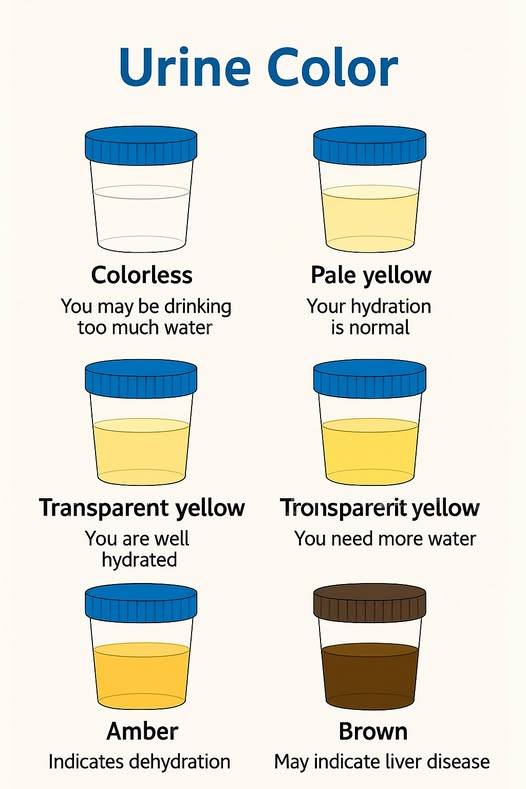
Why Urine Color Matters
Urine gets its color from a pigment called urochrome, which becomes more concentrated or diluted depending on hydration and other bodily processes. While variations are normal, sudden or persistent changes can signal that your body is trying to tell you something.
Urine Color Guide
1. Clear or Very Pale Yellow
What it may mean:
- You’re very well hydrated—or possibly overhydrated.
- Drinking a lot of water or diuretic beverages (like coffee or herbal tea) can lead to this color.
When to take note:
Occasional clear urine is fine, but consistently clear urine could mean you’re drinking more water than your body needs.
2. Light Yellow (Straw-Colored)
This is ideal.
It suggests proper hydration and normal kidney function. Most people aim for this color.
3. Yellow to Dark Yellow
What it may mean:
- Mild dehydration
- Concentrated urine from exercise, heat, or not drinking enough fluids
Tip:
Increase your water intake, especially if you’ve been sweating or active.
4. Amber or Honey-Colored
What it may mean:
- Moderate dehydration
Your body is conserving water, making your urine more concentrated.
What to do:
Drink water consistently throughout the day to restore balance.
5. Orange
Possible causes:
- Dehydration
- Certain foods (carrots, beets)
- Supplements (vitamin C, beta-carotene)
- Some medications
When to be cautious:
If the color is not from foods or supplements and persists, consider checking with a healthcare provider—especially if it’s accompanied by fatigue or pale stools.
6. Pink or Red
Possible causes:
- Foods (beets, blackberries, rhubarb)
- Certain medications
- Presence of blood (hematuria)
When to take action:
If red or pink urine appears without a dietary explanation, or continues for more than a day, it’s wise to consult a medical professional. Blood in the urine can have a variety of causes, some minor and some requiring care.
7. Brown or Cola-Colored
Possible causes:
- Severe dehydration
- Some medications or foods
- In rare cases, muscle breakdown or liver-related conditions
When to take action:
If drinking more water doesn’t change the color, or if it appears suddenly with pain, fatigue, or swelling, seek medical advice.
8. Blue or Green
Possible causes:
- Food dyes
- Certain medications
- Rare metabolic conditions
- Occasionally caused by certain bacteria
When to take action:
If you haven’t consumed anything that would explain unusual colors, and it continues, consult a healthcare provider.
