1. The Famous White Powder: Edible Penicillium Mold
Yes, sometimes it is mold—but the safe kind.
Traditional European salami is often coated with Penicillium nalgiovense, a beneficial mold intentionally added during curing. It:
- Protects the salami from harmful bacteria
- Helps it dry evenly
- Adds a subtle, earthy flavor
- Keeps the salami’s color stable
This white mold is similar in concept to the rind on brie or camembert. It’s perfectly safe to eat, though some people prefer to wipe it off.
Texture: Powdery, soft, matte
Color: Bright white or slightly off-white
Common in: France, Italy, Spain
2. White Spots Under the Casing: Tyrosine Crystals
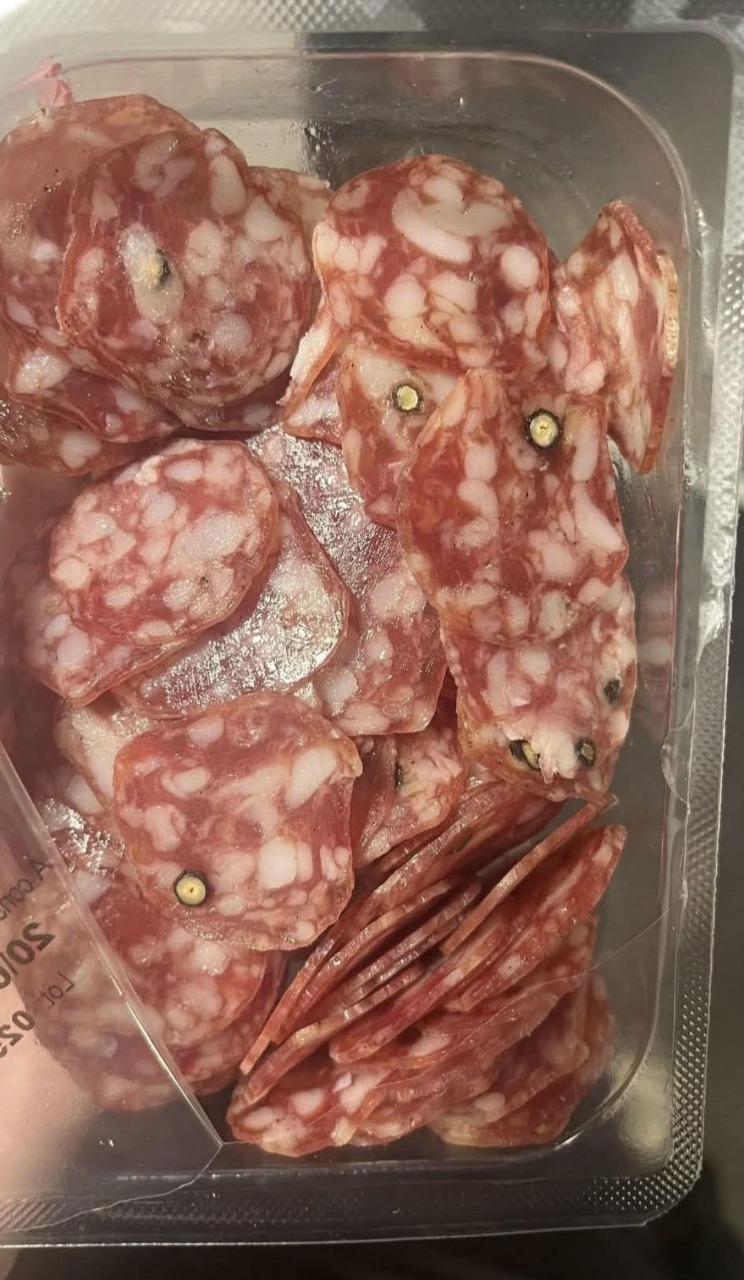
If the white material is inside the salami rather than on the outside, you may be seeing harmless amino acid crystals that form as proteins break down during long aging.
They’ve become common in aged cheeses too.
Texture: Hard, tiny, chalk-like crunch
Meaning: A sign of well-aged, high-quality salami
3. A Dusting of Rice Flour or Cornstarch
Some producers coat their salami in a fine white powder after curing to prevent stickiness or to mimic the traditional mold-covered appearance.
Texture: Powdery but slightly different from mold
Flavor: Neutral
Clues: Label may mention “flour-coated” or “dusted”
4. Fat Bloom: White, Waxy Patches
Sometimes, the white you see isn’t mold at all—it’s fat migrating to the surface.
When salami warms slightly or is stored too long, the fat inside can rise to the casing and create pale, waxy spots.
Texture: Smooth, greasy
Taste: Just… fat
Is it safe? Yes, assuming the salami otherwise looks and smells normal.
5. What If It’s Not White… but Actually Mold You Don’t Want?
Harmful molds are usually:
- Green
- Black
- Blue
- Fuzzy and aggressive-looking
- Odd-smelling
If you ever see these, it’s best to avoid eating the product or consult a professional for guidance.
Why Your Paris Salami Looked More “Wild” Than Supermarket Versions
In France, Italy, and other parts of Europe, small producers lean heavily on traditional curing methods, which naturally create that rustic, white-coated exterior. It’s a sign of craftsmanship—not spoilage.
In contrast, many American supermarket salamis are:
- Heat-treated
- Moldless
- Vacuum-packed
- Stabilized for visual appeal
So when you saw that Parisian salami, your reaction was completely understandable—it looked very different from what you were used to!
