ADVERTISEMENT
Why Static Was a Bigger Problem in the Past
Older trucks had:
- Less effective electrical grounding systems
- Non-conductive tires
- Less advanced safety standards during loading and unloading
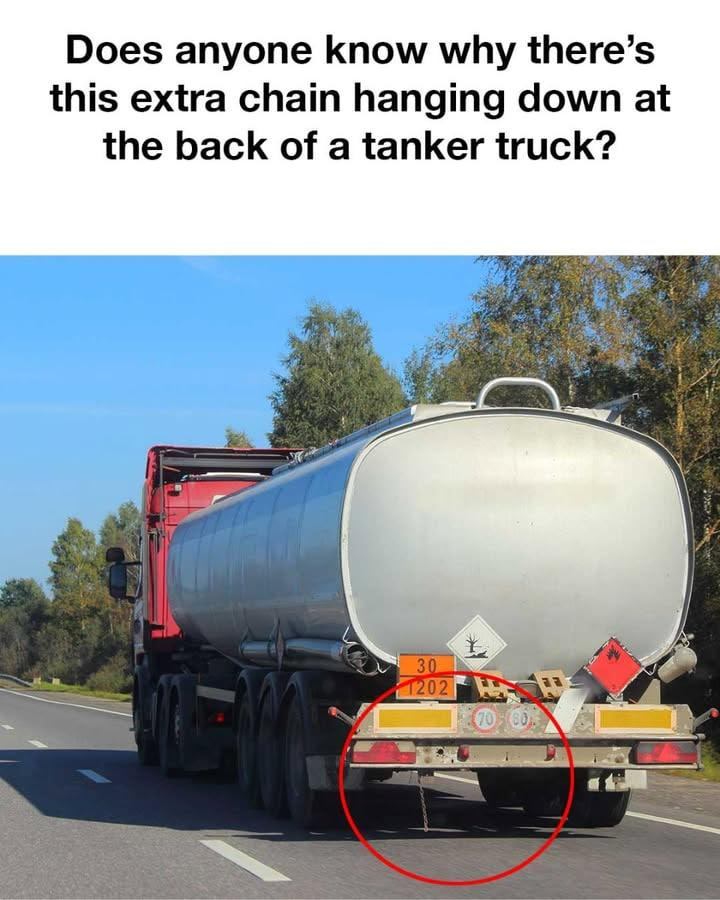
In those conditions, static buildup posed a greater risk, especially when transferring fuel. Chains provided a simple, low-tech way to help reduce that danger.
The Modern Reality: Do Chains Still Matter?
Today’s trucks are designed with:
- Conductive or semi-conductive tires
- Built-in grounding and bonding systems
- Strict safety procedures during fuel loading and unloading
Because of this, many experts agree that a dragging chain alone is not very effective at grounding a moving vehicle at highway speeds. In fact, the road surface (asphalt) isn’t always a good electrical conductor anyway.
So Why Are the Chains Still There?
There are a few reasons you still see them:
- Legacy Design
Some trucks keep the chain simply because it’s always been there. Fleet designs don’t always change quickly, especially if something isn’t causing problems. - Extra Layer of Safety
Even if the effect is minimal, some operators view the chain as a backup—one more small precaution in an industry where safety is critical. -
ADVERTISEMENT
