ADVERTISEMENT
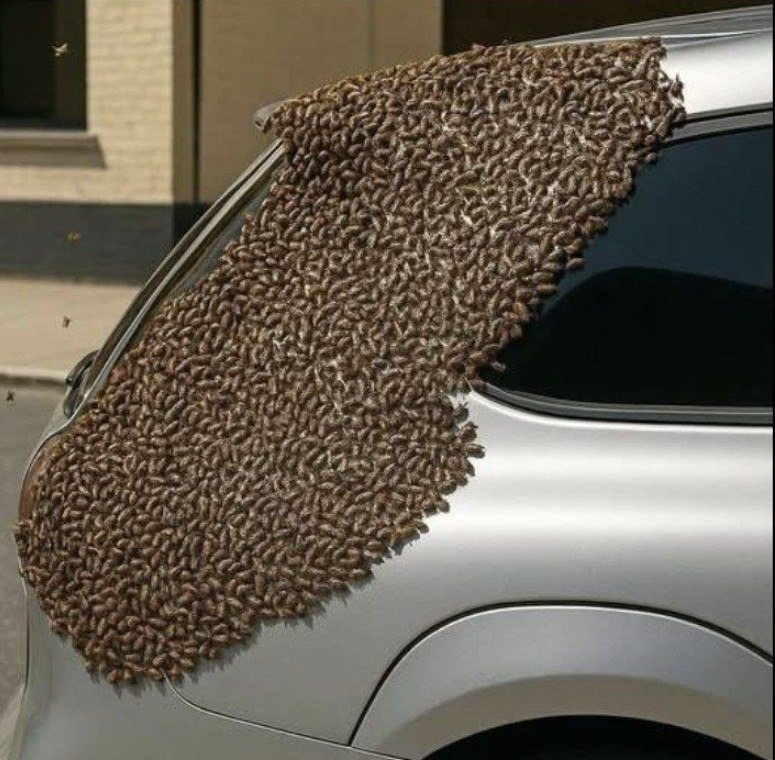
- Swarming: When a hive becomes too crowded, the queen and part of the colony leave to form a new nest. This is a normal, temporary behavior.
- Resting: Swarms often rest on branches or walls for a few hours or days before relocating.
- Protection: Clustering helps the bees stay warm and safe as they travel to a new home.
During this period, bees are usually docile and focused on their queen, not on stinging people.
Why You Shouldn’t Intervene
Trying to remove or harm a swarm can do more damage than good:
- Risk of stings: Disturbing bees unnecessarily can provoke defensive behavior.
- Environmental impact: Bees are essential pollinators; killing them disrupts local ecosystems.
- Legal protections: In many regions, bees are protected species, and harming them can have legal consequences.
What You Should Do Instead
- Stay Calm and Keep Distance
Bees are not aggressive if left alone. A safe distance of a few meters is usually enough. - Do Not Spray or Kill
Pesticides or physical attacks will only provoke the bees and harm the environment. - Avoid Loud Noises or Vibrations
Sudden disturbances can make bees defensive. Keep pets and children away until the swarm moves on. - Contact a Beekeeper (Optional)
If the swarm is in a location where it might be in danger or pose a long-term issue, a local beekeeper can safely relocate them. Most beekeepers are happy to rescue swarms without harming the bees. -
ADVERTISEMENT
