ADVERTISEMENT
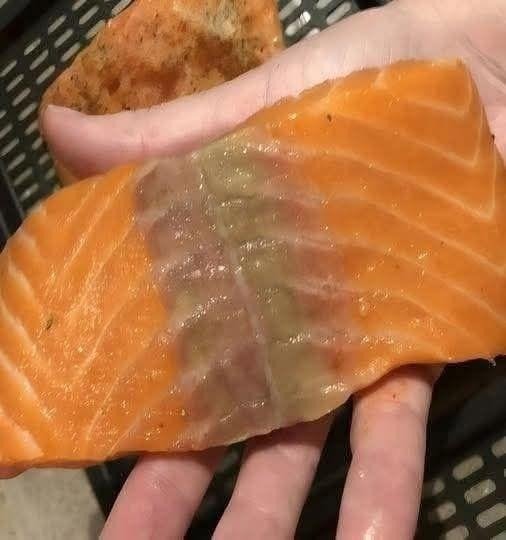
- Yellow or yellow-brown patches
- A slightly dull or dry surface
- Mild off-smells if spoilage has begun
🟡 This usually indicates aging, not freshness.
2. Protein Breakdown or Drying
If salmon is stored uncovered or loosely wrapped:
- Surface proteins can dry out
- The flesh may develop a yellowish film
- Texture can become sticky or tacky
3. Bacterial Growth (Warning Sign)
Yellow discoloration combined with:
- Sour or ammonia-like odor
- Slimy texture
- Soft or mushy flesh
…may indicate bacterial spoilage. At this stage, the fish should not be eaten—even if cooked.
4. Natural Color Variation (Rare)
Some salmon naturally show slight color variations due to:
- Diet
- Fat distribution
- Freezing and thawing cycles
However, this is usually subtle, not patchy or stained.
Is Salmon With a Yellow Stain Safe to Eat?
Since you purchased the salmon a week ago, here’s the key point:
🔴 Raw salmon typically stays fresh for only 1–2 days in the refrigerator (at or below 40°F / 4°C).
Even if it smells “okay,” yellow discoloration after a week strongly suggests the fish is no longer safe to eat.
How to Check Salmon Safety Quickly
Before cooking, always check:
- Smell: Fresh salmon smells clean and mild—not sour or fishy
- Texture: Should be firm and spring back when pressed
- Appearance: Bright pink or orange, no dullness or yellow patches
When to Throw It Away
❌ Throw the salmon out if:
- It has yellow or brown stains
- It smells unpleasant
- It feels slimy or sticky
- It’s been refrigerated raw for more than 2 days
Food poisoning from fish can be severe, so it’s better to be safe than sorry.
ADVERTISEMENT
