ADVERTISEMENT
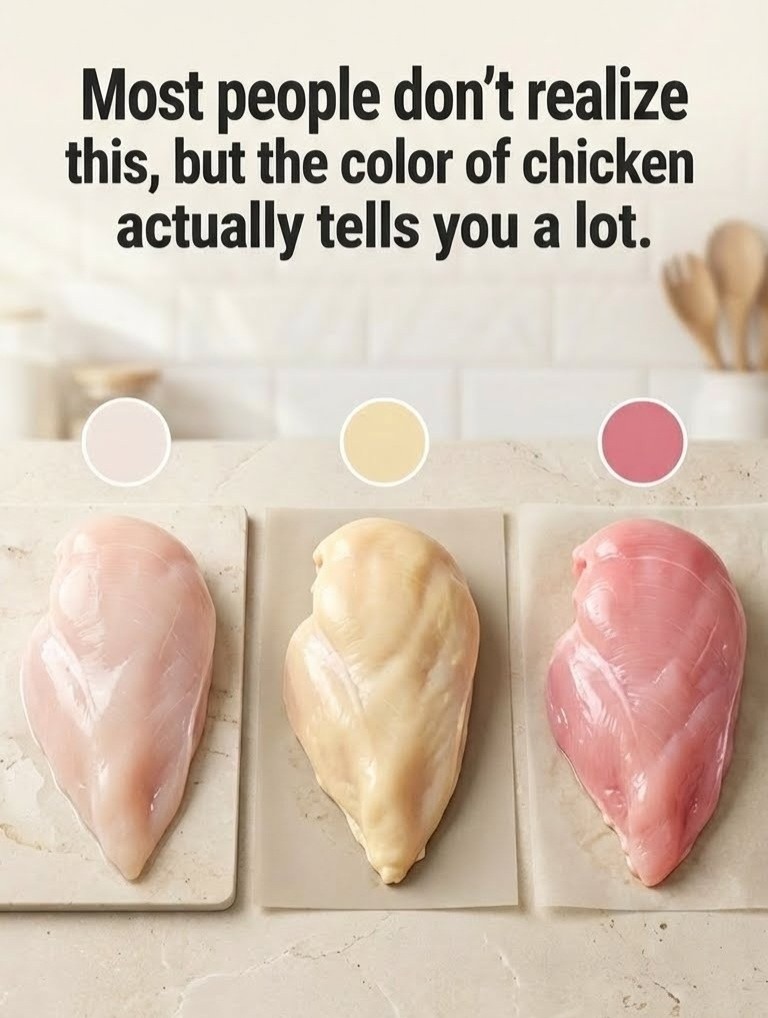
🐔 Why Chicken Comes in Different Colors
Chicken color varies naturally due to several factors:
- Diet: Chickens fed corn or grains rich in carotenoids often have yellow skin.
- Breed: Some breeds naturally produce lighter or darker meat.
- Age: Younger chickens usually have paler meat.
- Muscle use: Dark meat (legs and thighs) comes from muscles that are used more, while white meat (breast) is lighter.
These differences are normal and do not mean one chicken is better than another.
🟡 Yellow Skin vs. White Skin
- Yellow skin reflects what the chicken ate, not its quality.
- White or pale skin is just as nutritious and safe.
- Skin color does not affect taste, tenderness, or protein content.
Both types can be excellent choices depending on preference.
🔴 What About Pink, Red, or Gray Meat?
- Pink meat is completely normal for fresh chicken.
- Redness near bones often appears in younger chickens and is safe when fully cooked.
- Gray, green, or bluish tones can signal spoilage and should be avoided.
Always check color alongside smell and texture.
❄️ How Storage and Packaging Affect Color
Chicken may change color due to handling and storage:
- Vacuum-sealed chicken can appear darker because of low oxygen.
- Freezing may slightly dull the color without affecting quality.
- Exposure to air can cause mild discoloration that doesn’t always mean spoilage.
These changes are usually harmless if the chicken is stored correctly.
ADVERTISEMENT
